
Since 2013, people have come to our centre in Barcelona from very different paths: curiosity, a friend’s recommendation, or the wish to find another way of looking after themselves. And almost all of them arrive with the same questions.
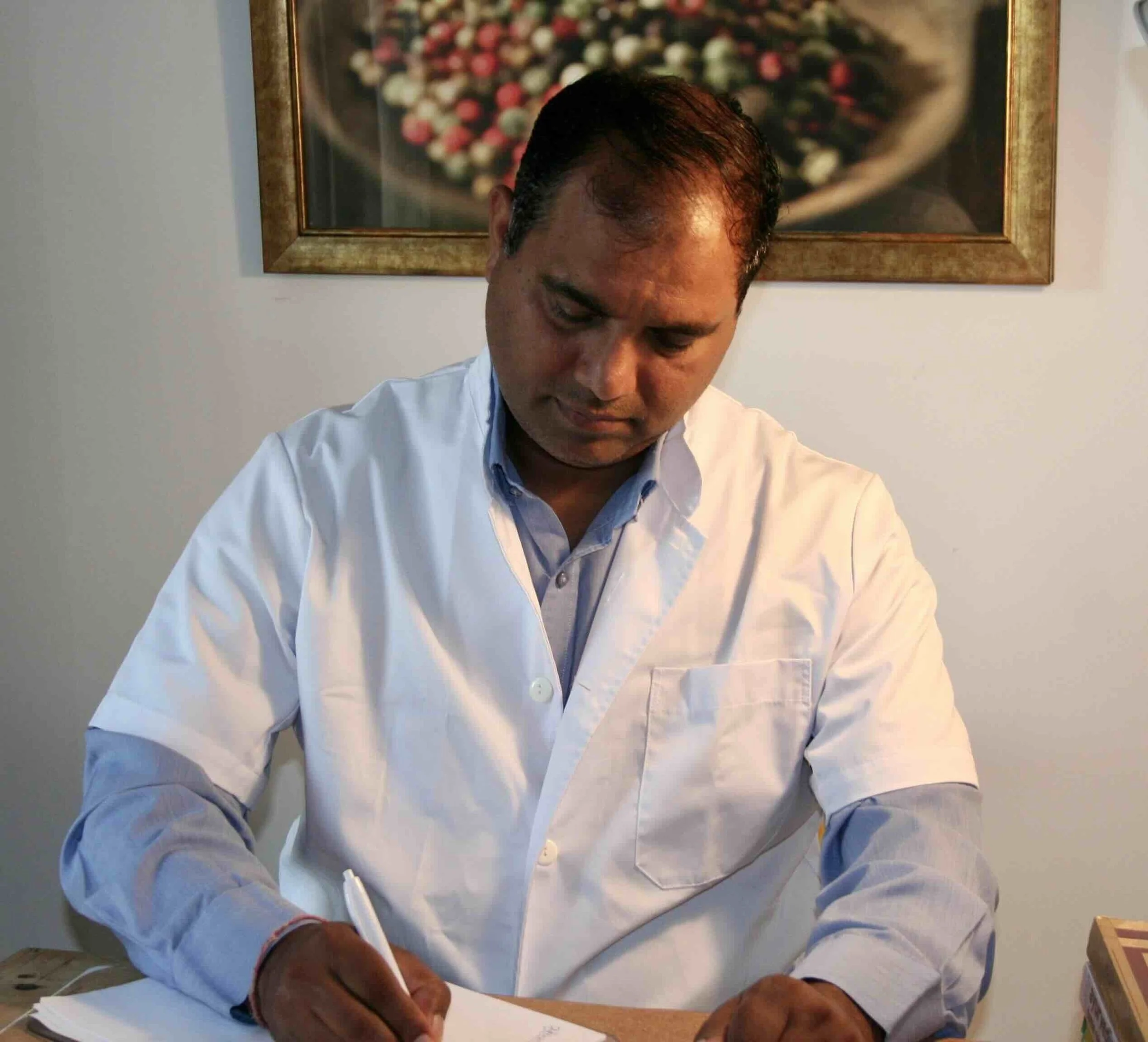
We gathered the five most common ones and asked Narayan Yadav, Ayurvedic Health Counselor (BAMS), who leads the centre.
1. Is Ayurveda just massage?
“It’s the question I hear most. Massage is the best-known part, but Ayurveda is much broader: it’s a traditional system from India, more than three thousand years old, that looks at the person as a whole.
It includes food, daily routine, rest, herbs, movement and, yes, bodywork sessions such as Abhyanga or Shirodhara. Massage is a very valuable tool, but it works best as part of a plan designed for each person.”
2. What happens in a first consultation?
“It lasts about 60 minutes and starts with a calm conversation: how you eat, sleep and digest, how your energy changes during the day, what concerns you.
Then I do a traditional Ayurvedic assessment: I read the pulse and look at the tongue, the skin and other signs. From this I identify your natural constitution (prakriti) and the imbalance present right now (vikriti).
By the end of the consultation you’ll know which dosha is dominant in you, what is out of balance now, and which small changes in food and routine can help. If it makes sense, I may also suggest a session, but it isn’t always necessary.”
3. Do I need to follow a strict diet?
“No. Many people come worried that I’ll forbid everything, and that’s not how it works. In Ayurveda, how and when you eat matters more than a fixed list of foods.
I prefer to start with two or three simple changes you can keep: having your main meal at midday, when your digestive fire (Agni) is strongest; choosing warm, cooked dishes in winter; and eating a lighter, earlier dinner. Small, steady changes are the ones you really notice.”
4. Is it compatible with my medical treatment?
“Yes. Ayurveda is complementary: it works alongside conventional medicine and never replaces it. If you’re following a medical treatment, keep it and talk to your doctor about it.
In every consultation I ask about medication and medical follow-up so I can adapt my suggestions. Many people who come to the centre do exactly this: they keep their doctor on one side and use Ayurveda as extra support for their wellbeing.”
5. How often should I come?
“It depends on whether we’re talking about the consultation or the sessions.
The consultation. If you want to understand your constitution and get guidelines on food and routine, one consultation is usually enough. When an imbalance has been building for a long time, I recommend a follow-up consultation after a month, to see how you’ve responded to the changes and adjust the plan.
The sessions. To stay in balance, one session a month or at each change of season is usually enough. If you’re looking for a deeper effect, it’s best to have them closer together at first, for example three Abhyanga sessions within a few weeks, and then space them out. In Ayurveda, consistency matters more than intensity.
Once or twice a year, at the change of season, a deeper programme such as Panchakarma can also make sense, always after a prior assessment.”
If you’re not sure where to start, a first consultation is the best place to begin: from there, we decide together what makes sense for you.
Have another question?
If your question isn’t here, send it to us on WhatsApp or Instagram and we’ll include it in the next Narayan answers.
Keep reading:
Abhyanga: full-body Ayurvedic oil massage → /abhyanga
Panchakarma in Barcelona → /panchakarma-barcelona
Ayurvedic consultation → /consulta-ayurvedica
Ayurvedic gift cards in Barcelona → /tarjetas-regalo
This content is for informational purposes only. Ayurveda does not replace medical diagnosis or treatment.
Narayan Yadav, Ayurvedic Health Counselor (BAMS) · Ayurveda Barcelona, Gràcia
